
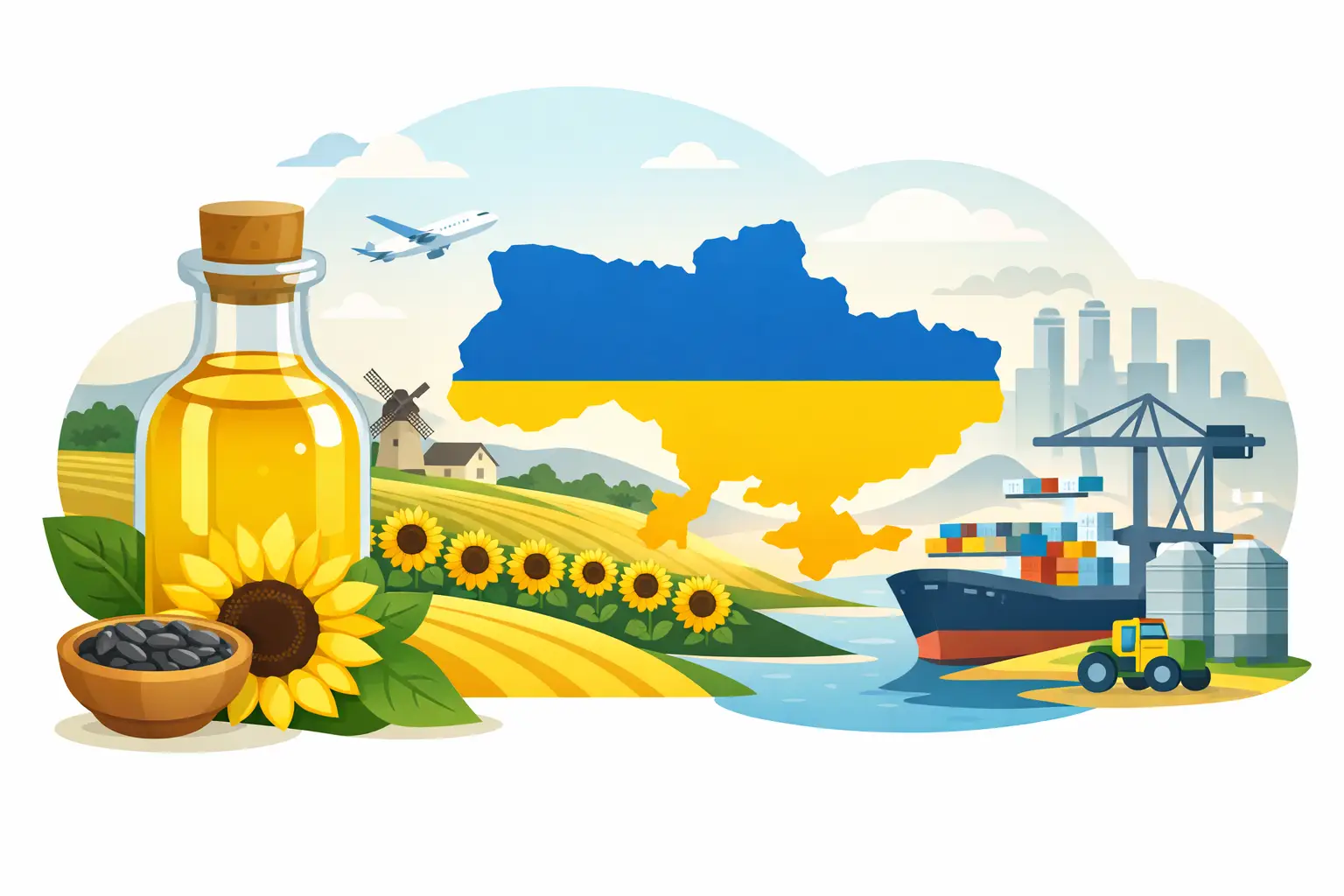
For bulk buyers, sunflower oil origin Ukraine is not a branding detail. It is a sourcing factor tied to crop availability, processing capacity, export orientation, and category experience. When origin is Ukraine, buyers are looking at one of the world’s most established sunflower-growing and sunflower-oil-producing countries, with a supply chain built around large-scale agricultural output and industrial processing.
That matters in procurement because origin affects more than geography. It shapes raw material access, crushing economics, product consistency, logistics planning, and supplier specialization. In edible oils, those variables influence whether a supplier can support long-term commercial demand rather than only spot-market opportunities.
Why sunflower oil origin Ukraine matters in trade
Ukraine’s position in sunflower cultivation was not built recently. It developed through decades of large-scale agricultural production, suitable growing conditions, and processing infrastructure designed specifically for oilseed output. For international buyers, this gives Ukrainian origin a practical commercial meaning. It indicates that sunflower oil is produced in a market where the category is central, not peripheral.
That distinction matters. A supplier operating in a country with limited sunflower production may depend more heavily on fragmented sourcing, imported seeds, or variable processing schedules. A Ukrainian producer is more likely to be embedded in a domestic ecosystem where sunflower seed supply, oil extraction, refining, storage, and export handling are established parts of the market.
This does not mean every supplier performs at the same level. Origin is an advantage, not a guarantee. Buyers still need to assess production history, operational continuity, and the manufacturer’s ability to supply according to contract specifications. But the origin itself provides a strong starting point because Ukraine is directly associated with the category.
What supports Ukraine’s sunflower oil position
The commercial strength behind sunflower oil from Ukraine comes from a combination of agricultural and industrial factors. The first is crop suitability. Ukraine has long been recognized for fertile agricultural land and conditions that support sunflower cultivation at scale. The second is category focus. Sunflower is not a minor oilseed in the country’s agricultural profile. It is a core crop with major relevance for both domestic processing and export business.
The third factor is processing capacity. Strong origin value depends on more than seed production. Buyers need refined or crude sunflower oil produced in facilities that can maintain volume, quality control, and shipment readiness. Countries that grow sunflower seed without sufficient crushing and refining infrastructure do not offer the same supply confidence. Ukraine’s position has historically been stronger because production and processing developed together.
For B2B buyers, this combination reduces one layer of uncertainty. A manufacturer sourcing and processing within a major sunflower-producing country is operating closer to the raw material base. That often improves purchasing flexibility, production planning, and response to market demand, although final performance still depends on the individual supplier.
Origin and category specialization
There is also a credibility factor attached to specialization. Buyers in the food industry generally prefer dealing with suppliers that are known for a category rather than treating it as an occasional line item. Sunflower oil origin Ukraine carries that category association. It signals that the product comes from a country with recognized depth in sunflower cultivation and edible oil manufacturing.
That is useful in commercial discussions because it supports the supplier’s identity as a producer, not simply a trader moving interchangeable volume. In wholesale and industrial purchasing, that difference can affect trust, technical communication, and long-term account development.
How origin affects supply expectations
When procurement teams evaluate sunflower oil, origin often influences expectations around availability, pricing logic, and production competence. With Ukrainian origin, buyers commonly expect access to suppliers that understand the category in operational terms - seed procurement, crushing yields, refining requirements, and export fulfillment.
This does not mean pricing will always be lower or supply will always be simpler. Global vegetable oil markets are affected by harvest conditions, energy costs, freight, currency movement, and geopolitical risk. Origin helps frame the supply environment, but it does not override market reality. A strong origin can support competitiveness, yet final commercial terms still depend on timing and contract structure.
For this reason, buyers should treat origin as one part of supplier evaluation. It is highly relevant, but it should be reviewed alongside production capacity, documentation, quality specifications, and delivery performance. In practice, the best sourcing decisions come from combining origin advantage with manufacturer credibility.
Sunflower oil origin Ukraine in a manufacturer assessment
If a supplier presents sunflower oil with Ukrainian origin, buyers should look beyond the country name and verify how that origin is reflected in the operating model. The key question is whether the supplier is genuinely connected to production.
A manufacturer-based profile usually gives stronger assurance than a purely intermediary-based model. It suggests control over processing stages, better visibility into specifications, and a more direct relationship with raw material inputs. For B2B transactions, that often improves communication on technical requirements, shipment planning, and continuity.
This is where operational history matters. A producer with a long track record in sunflower and vegetable oils can usually speak more clearly about production realities, seasonal factors, and commercial constraints. That is different from a seller whose role is limited to arranging transactions. Buyers sourcing for repeat business generally value that difference because it reduces avoidable uncertainty.
The same logic applies to regional manufacturing identity. A supplier based in a recognized agricultural and processing country is often better positioned to support category-specific requirements than a business with no direct production base. EKOBIOTEK, for example, presents itself as a Ukrainian agricultural manufacturer with operating history since 2003, which aligns with what many commercial buyers look for in this category: producer status, specialization, and continuity.
What buyers should verify beyond origin
Sunflower oil origin Ukraine is meaningful, but procurement should still stay disciplined. Country of origin does not replace supplier due diligence. Buyers should confirm whether the manufacturer can meet the exact product type required, whether crude or refined, and whether specification consistency matches the intended application.
They should also review packing and shipment formats, batch traceability, available documentation, and export handling experience. For some buyers, the central issue is price and volume. For others, it is repeatability across contracts or compatibility with private-label and food manufacturing requirements. The weight of each factor depends on the business model.
There is also a timing issue. Vegetable oil procurement can look very different under spot conditions than under planned supply agreements. A supplier with strong production credentials may still face constraints during periods of market disruption or peak demand. That is not unique to Ukraine, but buyers should account for it. Reliability is best evaluated through realistic production and logistics discussions, not assumptions based on origin alone.
The trade-off buyers need to understand
The main trade-off is simple. Buying from a recognized origin country can strengthen category confidence, but concentrated origin exposure can also make buyers more sensitive to regional disruptions. That does not weaken the value of Ukrainian origin. It means procurement teams should balance the advantages of specialized supply with practical risk planning.
For many buyers, that balance still favors Ukraine because of the country’s scale, experience, and direct association with sunflower oil. The key is to work with suppliers that can communicate clearly about production status, available volumes, and shipment execution.
Why Ukrainian origin remains commercially relevant
In edible oils, origin matters most when it connects directly to production reality. Ukraine remains commercially relevant because it combines agricultural depth with established sunflower oil manufacturing. That combination supports the category in a way that sourcing markets with thinner production bases often cannot match.
For importers, wholesalers, distributors, and food manufacturers, this relevance shows up in practical terms. It supports confidence that the product comes from a country where sunflower is a major crop, where oil processing is part of the industrial base, and where suppliers are more likely to understand the demands of bulk trade.
That does not remove the need for careful supplier review. It does make Ukrainian origin a strong signal that the supplier may be operating within one of the most important sunflower oil environments in the market.
For buyers assessing long-term supply, that is the useful point to keep in view: origin should not close the discussion, but it should shape where serious sourcing conversations begin.