
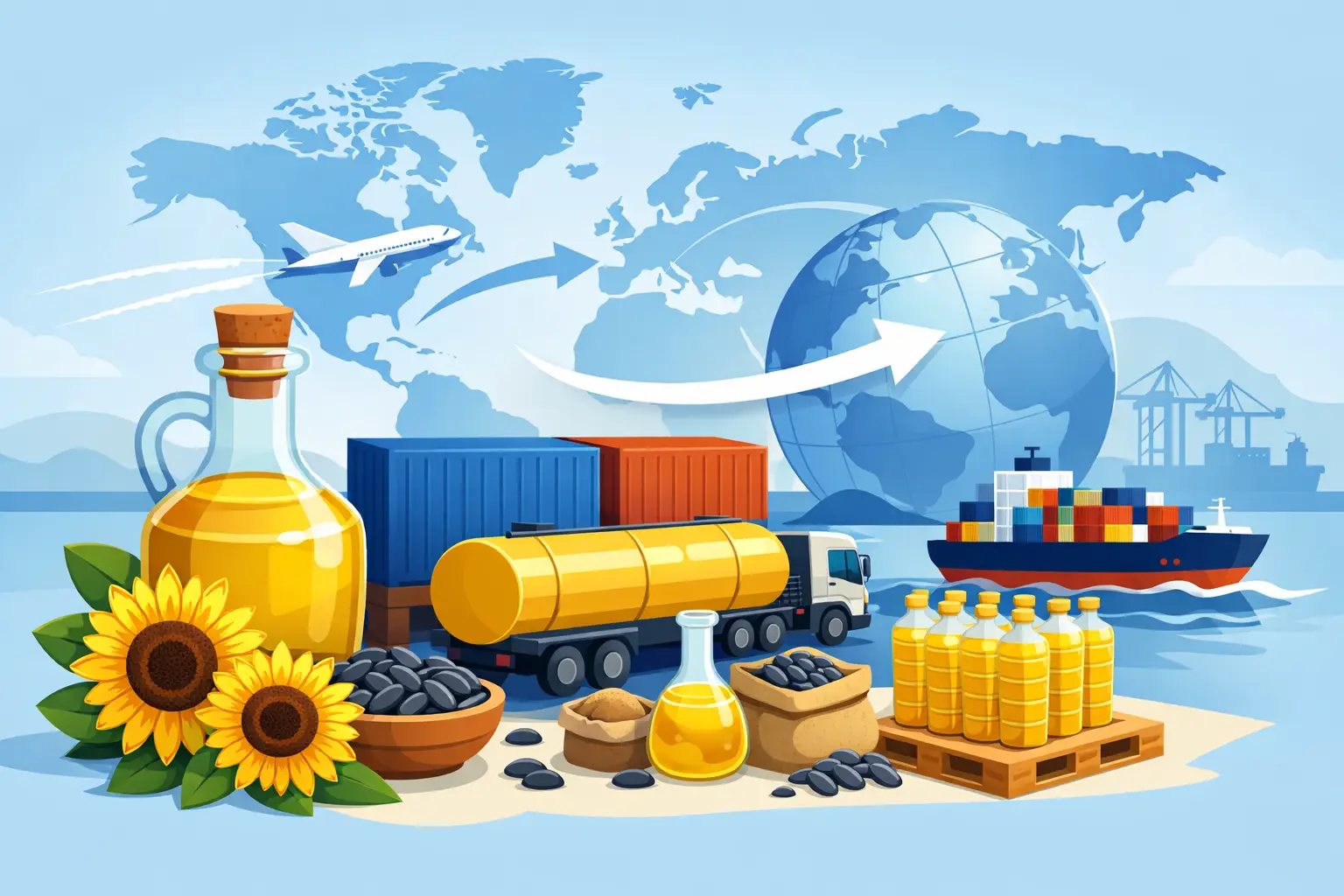
For bulk edible oil buyers, the question is not academic. The largest exporter of sunflower oil influences pricing, freight planning, contract timing, and supply risk across multiple regions. When export volumes shift in one origin, importers and food manufacturers feel it quickly.
Ukraine has long held a leading position in global sunflower oil trade. In practical market terms, when buyers ask who the largest exporter of sunflower oil is, Ukraine is typically the reference point because of its scale in sunflower cultivation, processing capacity, and established export orientation. That position matters not only because of volume, but because a large share of global buyers depend on Ukrainian origin for consistent commercial supply.
Why the largest exporter of sunflower oil matters to buyers
For procurement teams, export leadership is less about rankings and more about market influence. The largest exporting country tends to shape benchmark availability, impact regional price behavior, and affect how quickly supply disruptions move through the market.
Sunflower oil is not traded in isolation. It competes with soybean oil, palm oil, and rapeseed oil, but it also has its own demand profile in retail bottling, food processing, frying applications, and private label production. When the largest exporter faces pressure from crop issues, logistics constraints, or geopolitical events, substitution can happen, but not always without cost or reformulation issues.
That is why country leadership in sunflower oil exports matters to importers, distributors, and industrial users. A dominant exporter creates efficiency and scale. At the same time, dependence on one major origin introduces concentration risk.
Why Ukraine became the largest exporter of sunflower oil
Ukraine’s position did not appear by chance. It developed from a combination of agricultural conditions, industrial processing investment, and export-focused market structure.
The country has favorable land resources for sunflower cultivation and a long production history in oilseed agriculture. Over time, this agricultural base was matched by crushing and refining capacity. That matters because large-scale exports depend on more than raw seed output. Buyers need processed oil, stable quality, and the ability to move commercial volumes on schedule.
Ukraine also built a strong identity as a producer rather than simply a grower of agricultural commodities. In sunflower oil, that distinction is important. Export value is supported by processing infrastructure, technical control, and the ability to serve B2B requirements across multiple markets.
Another factor is market orientation. Some producing countries consume a larger share of output domestically. Ukraine historically developed as a major external supplier, which helped it become central to international sunflower oil flows.
Largest exporter of sunflower oil vs largest producer
These terms are often treated as interchangeable, but they are not the same. A country can be a major producer without being the largest exporter if domestic demand absorbs much of the volume.
Export leadership depends on surplus, processing capacity, trade routes, and commercial readiness. For buyers, the export ranking is usually more relevant than the production ranking because export volume reflects actual availability to the international market.
This distinction matters when comparing origins. One market may produce significant sunflower seed volumes but have limited refined oil exports. Another may have smaller agricultural output but stronger export systems. Procurement decisions should be based on what is available for shipment under commercial terms, not just agricultural statistics.
What can change export leadership
Even when one country leads the market, leadership is not fixed. Sunflower oil exports can shift because of harvest size, weather, crushing margins, trade policy, port access, freight costs, and regional demand.
Geopolitical disruption is also a real factor. In agricultural trade, capacity on paper does not always equal exportable volume in practice. A strong crop may still face movement constraints. Likewise, a smaller crop can sometimes be managed effectively if logistics remain stable and processing stays active.
For this reason, buyers should treat the phrase largest exporter of sunflower oil as a market indicator, not as a guarantee of uninterrupted supply. Scale matters, but reliability depends on execution across farming, processing, storage, documentation, and shipment.
What buyers should evaluate beyond country rank
Country of origin is important, but procurement decisions should not stop there. The better question is whether a specific producer can deliver the required specification and volume consistently.
Processing capability is one of the first checks. Buyers should understand whether the supplier operates as a manufacturer, trader, or intermediary. A producer with established operations generally offers better visibility into production control, quality management, and shipment planning.
Product format also matters. Crude sunflower oil, refined sunflower oil, and packaged formats serve different commercial needs. Specifications on color, odor, moisture, impurities, and packaging should be aligned early to avoid contract friction.
Then there is continuity. Some suppliers can quote aggressively but struggle with repeat performance. For importers and food manufacturers, continuity often matters more than a one-time price advantage. Delays, inconsistent documentation, and variable quality create costs that do not always appear in the initial quote.
Ukraine’s role in commercial sunflower oil supply
Ukraine remains highly relevant because buyers associate the origin with category specialization. That association is built on years of participation in global edible oil trade and on a mature production base.
For commercial buyers, Ukrainian origin often signals familiarity with export requirements, industrial-scale processing, and the ability to support wholesale and manufacturing channels. That does not mean every supplier is equal. It means the country has a strong structural position in the category.
This is where producer identity matters. A buyer sourcing from an experienced Ukrainian manufacturer is not simply buying commodity volume. The buyer is assessing process discipline, production history, and commercial dependability. Companies with long-term operating history in sunflower oil production are better positioned to support repeat business than firms that enter the market opportunistically.
EKOBIOTEK fits into that industrial supplier profile as a Ukrainian producer with a long operating background in vegetable oil manufacturing, serving buyers who need consistent commercial supply rather than retail-focused branding.
Risks buyers should account for
Even when sourcing from the largest exporter, prudent procurement requires a risk view. Origin concentration can expose buyers to sudden disruptions. Freight bottlenecks, regulatory shifts, insurance costs, payment constraints, and seasonal availability all affect landed cost and shipment reliability.
There is also the issue of price timing. Buyers sometimes assume a leading exporter will always offer the best commercial position. That is not automatically true. Market dislocation can create windows where alternative origins are more practical, even if they are smaller exporters.
Quality risk should be watched just as closely as supply risk. In edible oils, small deviations in specification can become larger issues in food production. A supplier’s quality systems, documentation discipline, and batch consistency are often more important than broad country reputation alone.
How to use this market fact in sourcing decisions
Knowing the largest exporter of sunflower oil helps buyers frame the market, but it should support decision-making rather than replace it. The practical value of that knowledge is in understanding where global supply gravity sits and how quickly changes in that origin can influence contracts and availability.
For sourcing teams, the right approach is balanced. Use country leadership as one signal of market depth and processing scale. Then qualify the actual supplier on manufacturing experience, export execution, product consistency, and communication quality.
That balance matters especially in bulk commodities. A supplier can come from the strongest origin and still underperform operationally. Another supplier may be smaller but better organized and more reliable. The objective is not to source from a headline. It is to secure usable volume, on-spec product, and predictable shipment performance.
In sunflower oil, Ukraine’s export leadership remains a key reference for the global market. For serious buyers, the more useful question is not only who leads exports, but which producer can turn that origin advantage into stable, commercial supply when the contract has to be fulfilled.